
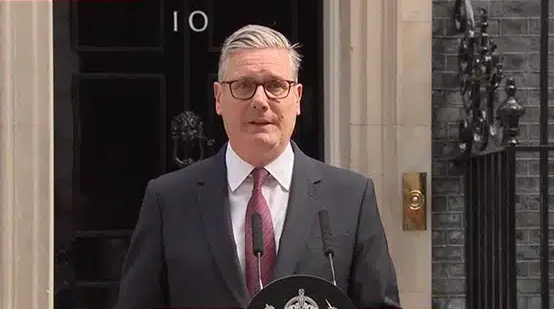
Keir Starmer has announced his resignation as Prime Minister less than two years after Labour’s landslide victory, delivering an emotional speech outside 10 Downing Street. The decision follows weeks of mounting pressure from his own party, significant Cabinet resignations, and recent political shifts, including the return of Andy Burnham to Westminster.
Starmer confirmed his departure on the steps of Downing Street, marking a dramatic end to his tenure amid party turmoil.
Starmer's Final Address
Addressing the public, Starmer said: “The question my party is asking now is whether I am best placed to lead us into the general election. I have heard the answer of my parliamentary party to that question. I accept that answer with good grace.”
He emphasised his dedication to the party, stating, “Every decision I have taken has been about putting the party I love first. That’s why I will resign as leader of the Labour Party.”
Party Turmoil Sparks Exit
Starmer’s resignation comes amid challenges faced by his leadership, including the loss of key Cabinet members and criticisms over policy decisions such as the Mandelson scandal and digital ID proposals. Despite managing notable achievements like reducing net migration to its lowest since 2012, internal party dissent ultimately forced his hand.
Leadership Race On Horizon
Labour’s governing body will announce a leadership contest starting July 9, with a new leader expected before Parliament reconvenes in September. The competition is set to shape the party’s direction ahead of the next general election, with figures like Andy Burnham poised to feature prominently.
Starmer’s Mixed Legacy
While Starmer’s time as Prime Minister was marked by missteps and controversies, political analysts suggest history may judge his tenure more kindly over time. His foreign policy decisions, including keeping the UK out of conflict in Iran, have been noted positively amid broader criticisms.
Originally published by UKNIP.